The Real Cost of 'Free' Event Sites with Ads
"Free" is one of the most powerful words in marketing. Free event invitation sites promise all the features you need without spending a penny. But if you're not paying for the product, you are the product - and so are your guests.
Let's examine what "free" actually costs.
How "Free" Event Sites Make Money
When a service is free, the business model is almost always advertising. This means:
- Your guests see ads on your invitation page
- Guest data is collected for advertising profiles
- Third-party trackers follow guests across the web
- The platform optimizes for ad revenue, not your event's success
Understanding this changes how you evaluate "free" options.
The Hidden Costs of Ad-Supported Event Sites
1. Your Event Looks Cheap
When guests open your invitation and see banner ads for car insurance, dating apps, or random products, it reflects on you as the host.
| Event Type | Ad Impact |
|---|---|
| Wedding invitation | Tacky, unprofessional |
| Corporate event | Embarrassing, damages brand |
| Birthday party | Cluttered, feels low-effort |
| Charity fundraiser | Undermines credibility |
Your carefully planned event deserves better than being surrounded by ads your guests didn't ask for.
2. Slower Page Load Times
Advertisements require:
- Additional HTTP requests (often 20-50+ per page)
- JavaScript execution for ad tracking
- Image and video downloads
- Third-party server connections
Studies show that 53% of mobile users abandon pages that take longer than 3 seconds to load. Ad-heavy pages regularly exceed this threshold.
Typical load time comparison:
| Page Type | Load Time |
|---|---|
| Clean invitation page | 1-2 seconds |
| Ad-supported page | 4-8 seconds |
| Ad-heavy page (video ads) | 10+ seconds |
Every second of delay costs you potential RSVPs.
3. Guest Privacy Violations
When guests visit ad-supported invitation pages, they're typically tracked by:
- Google Ads - builds advertising profile
- Facebook Pixel - tracks for social media targeting
- Data brokers - sells information to third parties
- Retargeting networks - follows guests across the web
Your aunt visits your birthday invitation and suddenly sees ads for party supplies everywhere she goes online. That's not a coincidence.
4. Mobile Data Consumption
Ads consume significant mobile data:
| Content Type | Typical Size |
|---|---|
| Your invitation content | 50-200 KB |
| Display ads | 200-500 KB |
| Video ads | 2-10 MB |
| Tracking scripts | 100-300 KB |
Guests on limited data plans pay real money to view advertisements they didn't want.
5. Security Risks
Ad networks have been vectors for malware distribution. "Malvertising" attacks inject malicious code through legitimate-looking advertisements.
While major platforms have security measures, the attack surface exists:
- Ads load code from external servers you don't control
- Compromised ad networks can serve malicious content
- Guests may click ads thinking they're part of your invitation
6. Distraction from Your Event
Ads are designed to capture attention. That's their entire purpose. When guests are reading your event details, ads compete for their focus:
- Animated banners draw eyes away from your content
- "Click here" calls-to-action confuse the RSVP process
- Video ads with sound are jarring and disruptive
Your invitation becomes a battlefield for attention rather than a clear communication.
The Data Collection Problem
Free platforms collect extensive data about your guests:
What They Collect
| Data Type | How It's Used |
|---|---|
| Email addresses | Marketing lists, sold to partners |
| Names | Profile building |
| Location data | Targeted advertising |
| Device information | Cross-device tracking |
| Browsing behavior | Interest profiling |
Who Gets This Data
The platform's privacy policy (that nobody reads) typically allows sharing with:
- Advertising partners
- Analytics providers
- "Business partners"
- Affiliates and subsidiaries
- Data brokers
When you invite someone to your event on these platforms, you're implicitly signing them up for this data collection.
The Professional Image Problem
Consider how different invitation experiences reflect on you:
Ad-Supported Invitation:
[BANNER AD: LOSE WEIGHT FAST!]
You're Invited to Sarah's Wedding!
Saturday, June 15th at 4:00 PM
[SIDEBAR AD: SINGLES IN YOUR AREA]
Please join us to celebrate...
[VIDEO AD: AUTO-PLAYS WITH SOUND]
Clean Invitation:
You're Invited to Sarah's Wedding!
Saturday, June 15th at 4:00 PM
Please join us to celebrate...
[Beautiful invitation card with event details]
[Simple RSVP button]
Which experience would you want for your special event?
When "Free" Makes Sense
To be fair, ad-supported platforms aren't always wrong. They may work for:
- Very casual events where image doesn't matter
- Large public events where guest privacy expectations are low
- Test events before committing to a tool
- Extremely tight budgets where any cost is prohibitive
But for anything where you want guests to have a good experience, the hidden costs outweigh the price tag savings.
Calculating the True Cost
Let's do the math for a 50-person event:
"Free" Ad-Supported Platform:
- Monetary cost: $0
- Guest privacy: Compromised for 50 people
- Professional image: Damaged
- Guest experience: Degraded
- Page abandonment: ~20% (10 people may not RSVP due to slow/cluttered page)
- Data sold: Yes
Paid Ad-Free Platform ($5-20/month):
- Monetary cost: $5-20
- Guest privacy: Protected
- Professional image: Maintained
- Guest experience: Clean and fast
- Page abandonment: ~5% (typical for fast pages)
- Data sold: No
Is saving $5-20 worth compromising the experience for 50 people and potentially losing 10 RSVPs?
What to Look For Instead
When choosing an event invitation platform, prioritize:
1. No Advertisements
The invitation page your guests see should contain only your event information. No banners, no pop-ups, no auto-playing videos.
2. Clear Privacy Policy
Look for platforms that:
- Don't sell guest data
- Don't share with advertising networks
- Don't require guest account creation
- Delete data after events conclude
3. Fast Load Times
Test the platform yourself. If pages feel slow, imagine how they feel on a guest's older phone with spotty reception.
4. Transparent Pricing
Subscription models align the platform's incentives with yours. They make money by providing good service, not by exploiting your guests.
The Subscription Alternative
Subscription-based platforms like JoinMyEvent take a different approach:
How it works:
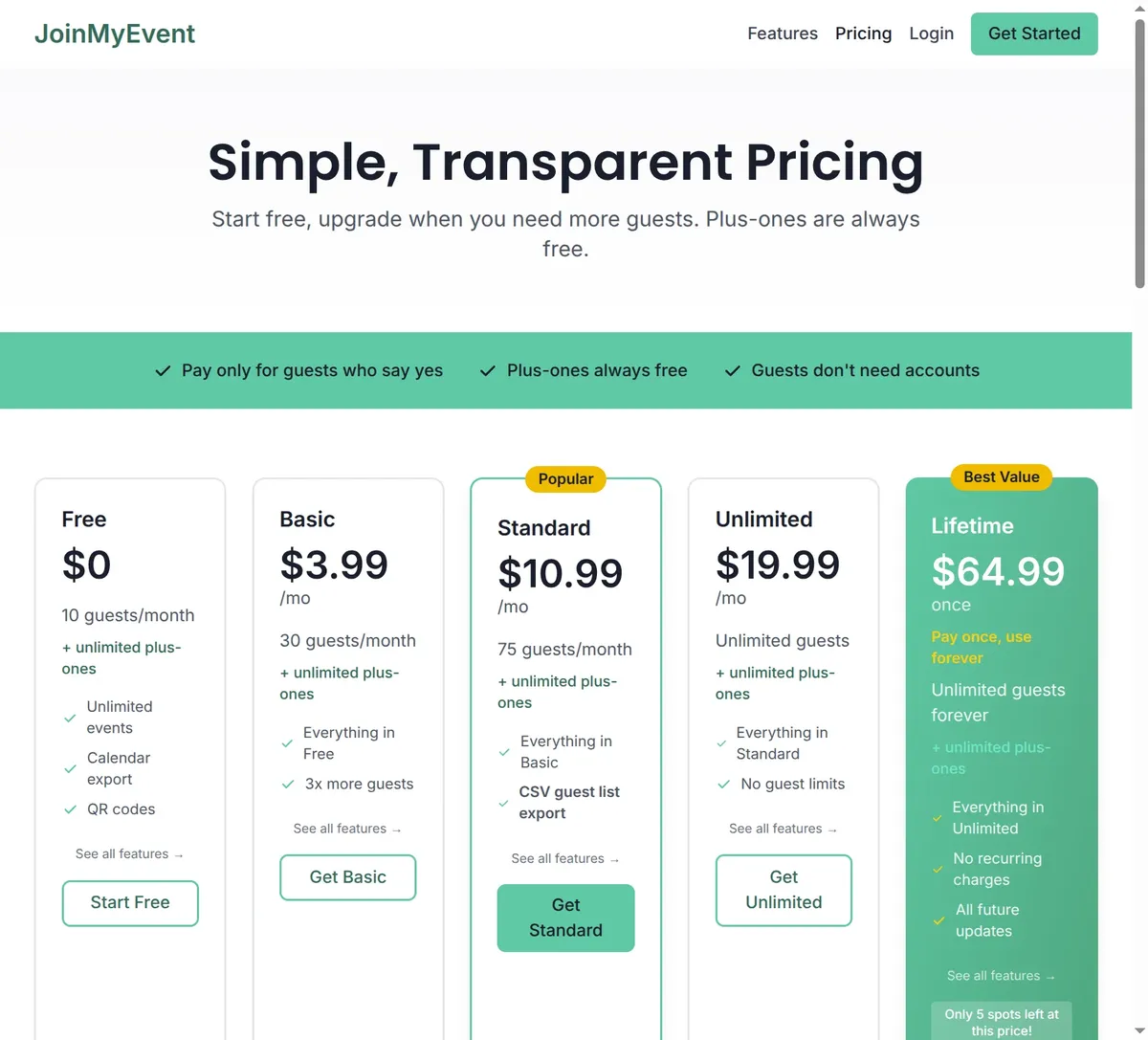
- You pay a small monthly fee (or one-time lifetime price)
- Your guests see clean, ad-free invitation pages
- No guest data is sold or shared
- The platform profits from providing good service, not advertising
What you get:
- Professional image preserved
- Fast-loading pages
- Guest privacy respected
- No data collection beyond what's needed for RSVPs
Making the Switch
If you're currently using ad-supported platforms, consider switching for your next event:
- Evaluate your current platform - Visit your invitation page in incognito mode. Count the ads.
- Test load time - Use Google PageSpeed Insights to measure performance.
- Read the privacy policy - Search for terms like "advertising," "partners," and "third parties."
- Try an alternative - Most paid platforms offer free tiers for small events.
JoinMyEvent: Ad-Free by Design
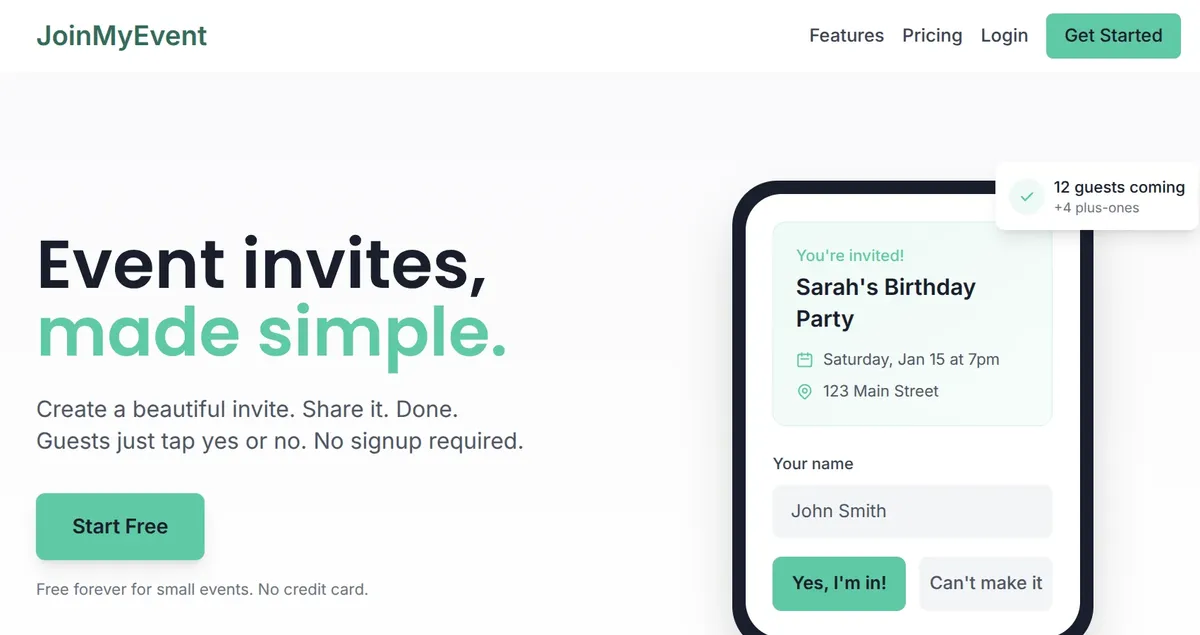
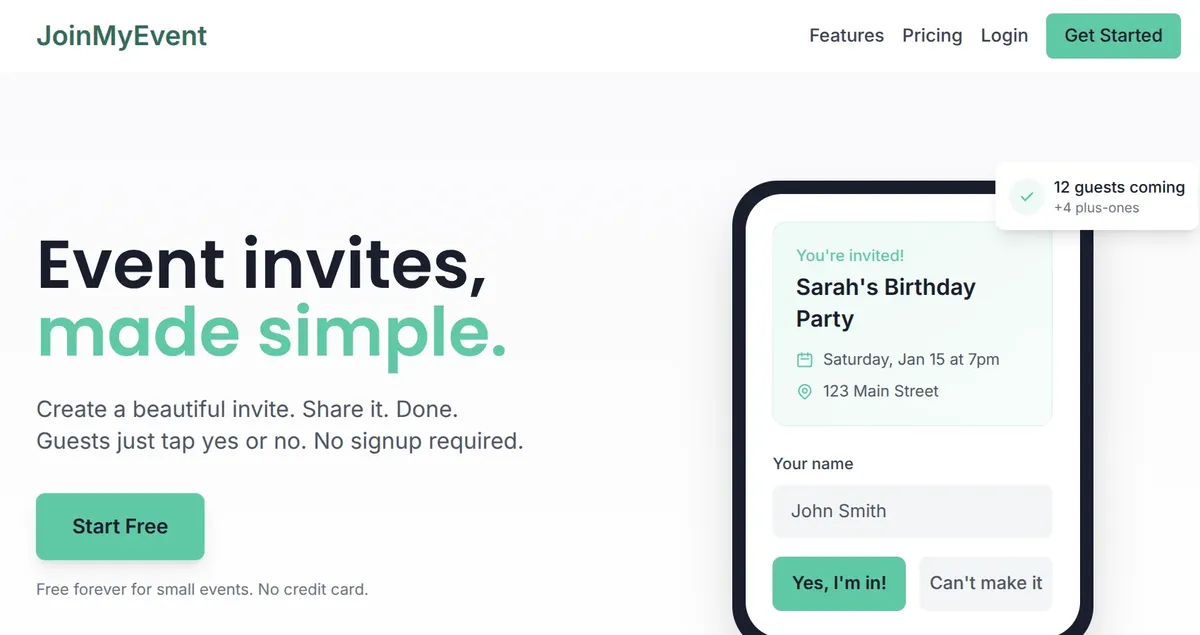
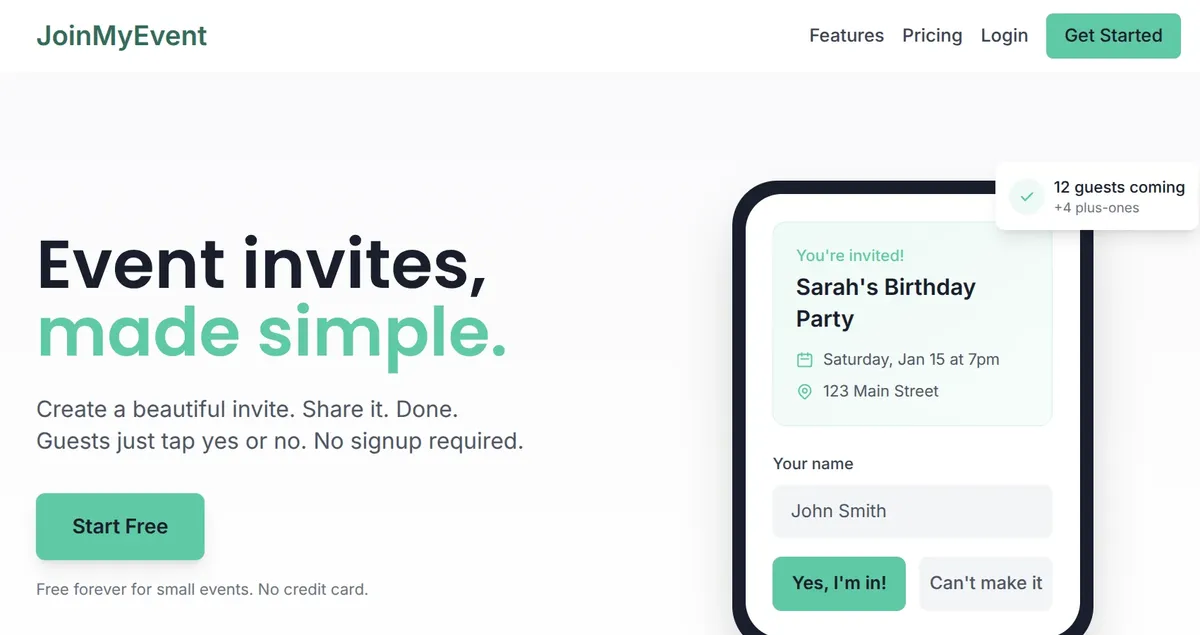
We built JoinMyEvent with a simple principle: your guests should never see advertisements.
Our commitment:
- Zero ads on any page, ever
- No guest data sold or shared
- No tracking pixels or retargeting
- Fast, clean pages that load in under 2 seconds
- Subscription model that aligns our success with yours
Your event deserves an invitation that looks as good as the occasion you're planning.
Try JoinMyEvent Free - See what ad-free invitations look like.
Questions about ad-free event platforms? Email us at contact@joinmyevent.co - we're happy to help.
Ready to Simplify Your Event Planning?
Create beautiful event invitations where guests don't need to sign up