What 'Free' Invitation Sites With Ads Really Cost
Updated October 2026.
"Free" invitation sites are free the way commercial TV is free. Someone is paying, and on these sites it's your guests, with their attention and their data.
This post is about what that costs. It's written from the host's side, since the host picks the tool and the guests live with it.
How the free sites make money
The model is the same across the big names: the invite is free to send, ads appear on the page your guests open, and the ad-free version is a paid upgrade.
The numbers, from the vendors' own pricing pages as of October 2026:
- Evite: free designs show ads. Ad-free is a per-invitation purchase, from $17.99 for up to 12 guests to $99.99 for up to 750. Next party, you pay again.
- Punchbowl: a subscription with a free trial, and the ads stay on your invitations unless you're on the Platinum tier, from $11.99 a month.
- Paperless Post: no ads, but priced per guest: $0.50, $1.05 or $1.44 per guest depending on the tier. A 100-person event runs $50 to $144.
So the honest price of an ad-free invite on these sites is somewhere between $18 and $100 per event.
What the ads cost the host
The invite looks cheap
Your guests judge the event by the invite. When it arrives with a banner ad above the date and another below the RSVP button, it looks like you took the free option. For a wedding, a fundraiser or a client event that's a real cost, even if it isn't on a bill.
Fewer replies
Ads are built to pull attention, and they pull it away from your RSVP button. They also make the page heavier, so it loads slower on the phones your guests are holding. Some of those guests close the tab. You'll never know which ones.
You become the one who did that to them
Ad networks track visitors. Your guests open your invite, and the ad networks learn a little more about them. You didn't mean to hand your friends over to an ad profile, but you picked the site.
What the ads cost the guests
- Data: ad scripts, images and video add up, and on a limited mobile plan that's paid for by the guest.
- Tracking: the same ad networks that show the banner build a profile from the visit.
- Attention: a page that's fighting for their eyes is a worse place to say "yes, I'm coming".
When the ads don't matter
To be fair, sometimes they don't. A casual get-together in a group of people who don't care, a public event with no privacy expectation, or a quick test of a tool. If none of the above bothers you, the free tier of any of these sites works.
What to look for instead
If it does bother you, here's what I'd check before picking a tool:
- Open an invite in a private browser window. Count the ads. That's what your guests see.
- Ask what the guest has to do to reply. A name should be enough. Accounts, apps and phone verification all cost you replies.
- Ask what the ad-free version costs, per event. Per-invite fees and per-guest fees add up over a year of hosting.
- Read how guest data is handled. No ad networks, no data sold, nothing collected beyond the RSVP.
How JoinMyEvent handles it
No ads, on any page, free or paid. No ad trackers. Guests reply with a name and nothing else.
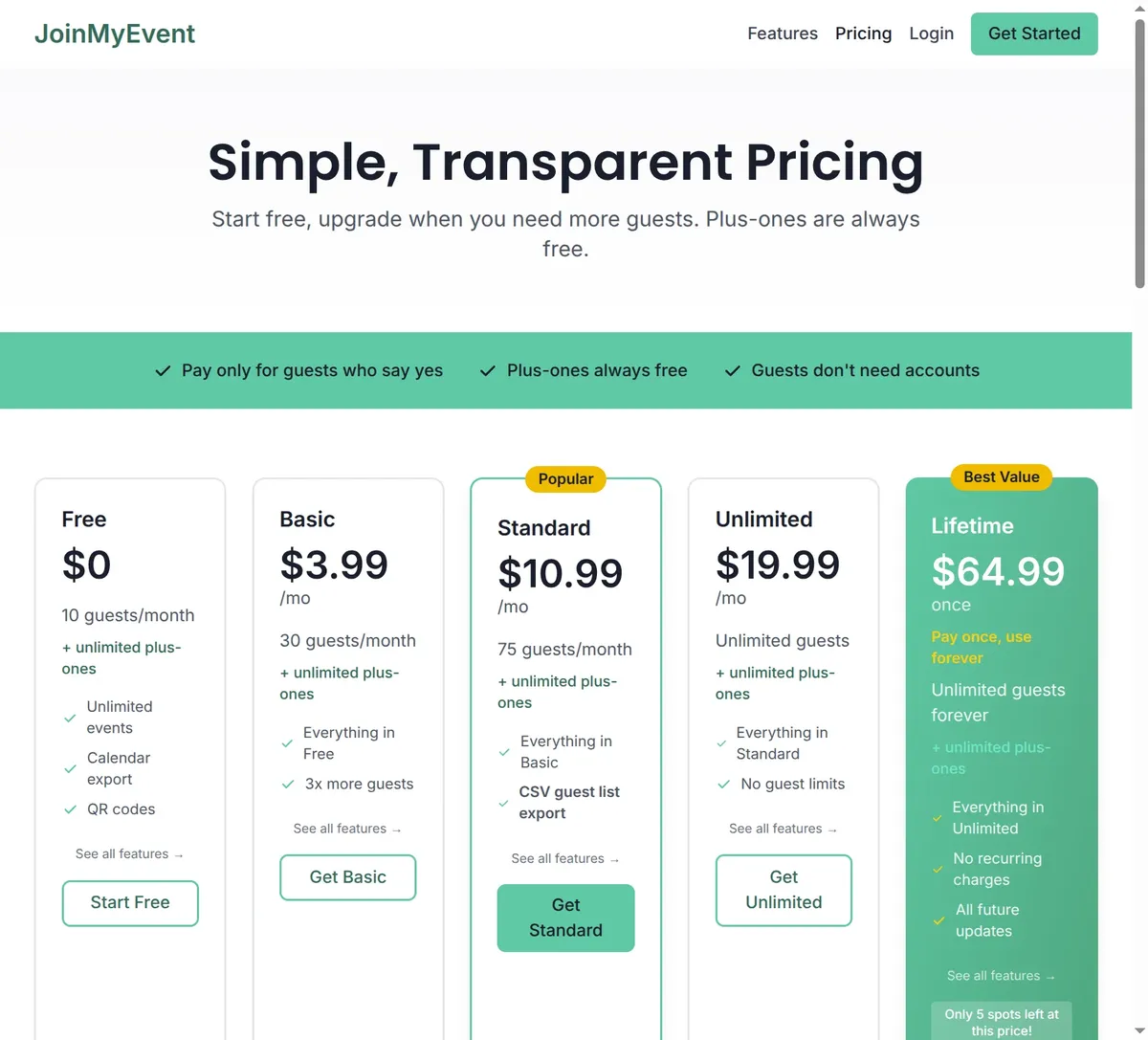
Making invites and collecting RSVPs is free without limits. Free cards carry a small "Made on joinmyevent.co" credit in the corner. If you want a clean card, that's $2.99 one-time for that event, and there are passes for frequent hosts. The details are in the pricing explainer.
That's the trade I'd rather offer: a small line of credit on the free card instead of ads on your guests' screens.
Make a free invite and open it on your phone. That's the page your guests would get :)
Put it to use
Make your invite
Free, about a minute, and your guests RSVP without an account.
Create your free invite